
Most engaged couples know how to plan a wedding. They compare venues, taste cakes, choose flowers, book photographers, and spend hours deciding how one important day should look. Yet the marriage that begins after that day often receives far less preparation.
That does not mean couples are careless. Usually, they are deeply in love and genuinely hopeful. They simply assume love will teach them what to do when money becomes tense, family opinions become intrusive, expectations collide, or one person feels unheard. Love matters enormously, but love is not the same as knowing how to communicate, repair hurt, protect priorities, or make decisions as a team.
Marriage is not difficult because two people stop caring. It becomes difficult when two sincere people bring different histories, habits, fears, and ideas into one home without a shared way to handle them. Nobody hands most couples a clear road map. Parents may have modelled some things well and others poorly. Friends can offer opinions, but not always wisdom. By the time a couple realizes they need better tools, frustration may already be speaking louder than affection.
Preparing for marriage is not expecting it to fail. It is respecting the commitment enough to enter it with open eyes, honest conversations, and practical support. That is exactly what David and Darlene discuss in the short video below.
A lasting marriage deserves the same thoughtful preparation as the wedding that begins it. In the reel below, David and Darlene explain why engaged couples benefit from learning before problems appear. Drawing on years of teaching premarital classes, watch their full reel to understand the tips…
Love may bring two people to the altar, but commitment gives that love structure. Marriage Ethos treats marriage as something deliberately built through loyalty, responsibility, and daily choices. Feelings rise and fall. A strong marriage is not measured by constant harmony, but by whether both people keep choosing honesty, care, and repair when life becomes uncomfortable.
Many couples inherit expectations without realizing it. They may repeat what they saw at home or react against it, but neither response is the same as learning. The book encourages couples to examine priorities, wounds, boundaries, communication styles, faith, and their shared vision before those subjects become recurring arguments. Preparation turns assumptions into conversations.
The easiest conflict to repair is often the one that has not yet hardened into resentment. Premarital preparation gives couples language for difficult subjects while goodwill is strong. David and Darlene compare this to preventive care: learning early does not guarantee an effortless marriage, but it helps couples recognize strain, respond maturely, and seek help before distance feels normal.
Small Habit | What It Means and Why It Matters |
Dialogue Daily | Share thoughts and feelings regularly so concerns are understood before distance quietly grows. |
Devotion Regularly | Pray and reflect together to strengthen faith, unity, and support through difficult seasons. |
Date Weekly | Protect focused time together to preserve friendship, affection, curiosity, and emotional closeness. |
Depart Monthly | Try something new together to break routine, create memories, and renew connection. |
The value of Marriage Ethos is not that it promises a problem-free marriage. It helps couples build a shared way of meeting problems before blame, distance, or confusion take over.
Learn to speak clearly and listen to understand.
Turn good intentions into habits you can actually use.
Disagree without treating each other like opponents.
Enter marriage with fewer hidden assumptions.
Decide what kind of home, partnership, and legacy you want to create together.
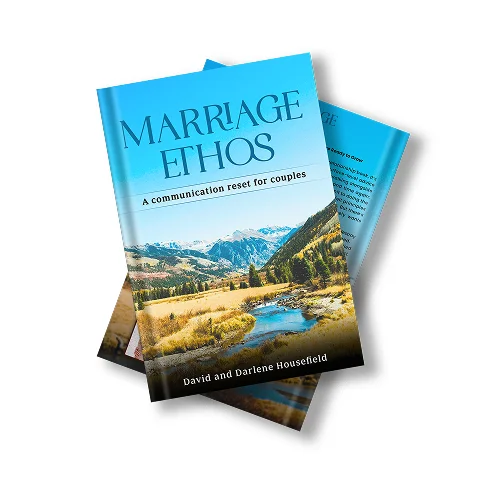
A wedding celebrates your decision to marry; preparation helps you live that decision when life becomes less polished. Marriage Ethos is worth reading now because its lessons are easier to practice before resentment or silence settles in.
Read it together. Pause over the uncomfortable questions. Talk without chasing perfect answers. You are not studying for a test; you are learning the person you have chosen. Before finalizing another wedding detail, begin preparing for the marriage itself.
Couples should begin several months before marriage. This allows enough time to explore important subjects without the challenge of wedding deadlines.
Some of the things listed are finances, faith, family boundaries, children, careers, household roles, intimacy, conflict, communication, priorities, and the future you hope to build should be discussed, as it gives a clear view of how life will be after marriage.
Couples often struggle for various reasons. Such as unspoken expectations, poor communication, unresolved wounds, and external pressures that arise before they have the tools to respond.
Yes. Married couples can use its principles to reset habits, repair disconnection, improve communication, and renew vision at any stage.
Take this short 2-minute quiz to discover whether your relationship needs stronger communication, deeper connection, restored trust, or a more intentional reset.
Based on your answers, your next best step is to start with the Marriage Ethos framework.